

- IMO
- 7944695
Intelligence
Risk & Sustainability
Composite Risk
Risk Score
Strong, corroborated adverse evidence — a detention, sanctions exposure or a dark-fleet signal.
A coverage-weighted blend of the 2 components we could read for this hull — the weights renormalise over only the components present, so a thin read is never inflated and a hull is never credited a “safe 0” for a signal it has no row for. Higher means riskier. Derived in-house from government-open port-State-control, flag, sanctions and our own vessel data; weight it by the coverage above.
Transparency
Risk signals
Behavioural flags raised against this vessel — each shown with the raw evidence behind it. Derived in-house from data we are entitled to publish; informational, not a determination of wrongdoing.
Stopped transmitting relative to the live feed front
- On Sanctions List
- yes
- Regimes
- OFAC
Method: vessel is on a sanctions list but has never appeared on our live AIS feed. Source: ais_positions (absence) + sanctioned_vessels.
Signals are a current-state view: a flag clears once the vessel stops tripping its detector. These are screening indicators, not a substitute for your own due diligence.
Commercial
Voyage Estimate
Overview
About This Vessel
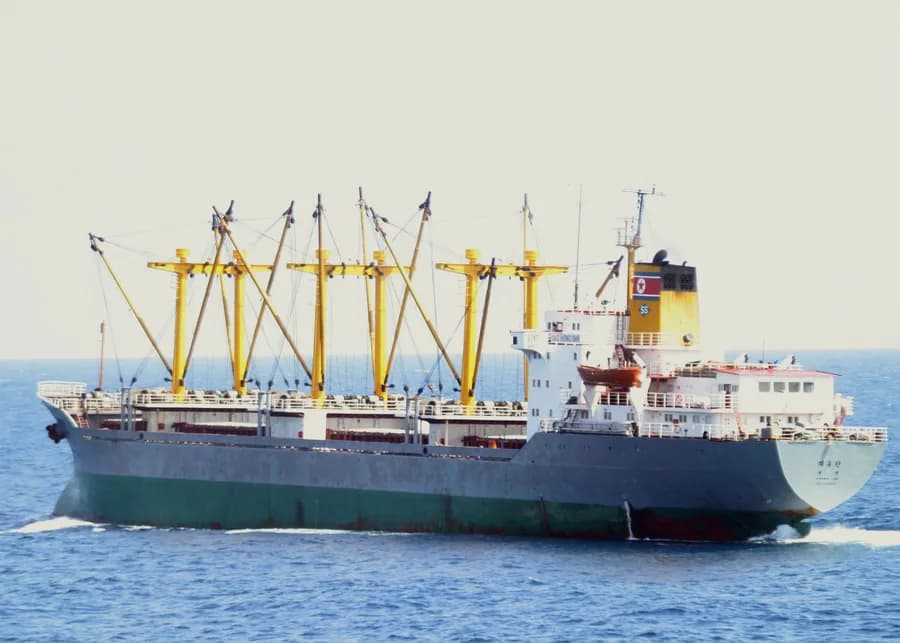
On the evening of 29 October 2007, seven Somali pirates hijacked the North Korean cargo ship MV Dai Hong Dan (Korean: 대홍단호) in the Indian Ocean, approximately 110 kilometres (70 miles; 60 nautical miles) northeast of the Somali capital, Mogadishu. The Dai Hong Dan, with a crew of 22 sailors, had departed Mogadishu earlier that day after unloading a shipment of sugar with the help of locals, including the pirates. The pirates gained permission to board the ship under the pretense of being Somali security personnel. They subsequently confined the crew to the steering and engine rooms at gunpoint and demanded a ransom of US$15,000 for their release. The following day, a US naval vessel, the Arleigh Burke-class destroyer USS James E. Williams, responded to a distress signal sent out by the Dai Hong Dan. The US Navy ordered the pirates to surrender via radio, which, according to the US Navy, prompted the crew of the Dai Hong Dan to rebel against their captors and regain control of their ship. A gunfight between the North Korean crew members and the Somali pirates left at least one pirate dead and three pirates wounded. US Navy medical personnel treated three wounded North Koreans, although the North Korean government later stated six of its sailors had been wounded in the incident. North Korea's official account of events differed slightly from the US Navy's.
Visual Archive
Gallery
Community
Vessel Comments