

- IMO
- 7382691
- MMSI
- 265704520
- Call Sign
- SDMO
Technical Specifications
Key Figures
Live Tracking
Current Position
Where it waited most
Most time stopped at Turku — 10 d across 25 stays.
- 1Turku10 d · 25×
Derived from the AIS track — runs of near-zero speed (anchored, moored or drifting) snapped to the nearest port. Builds up as we observe the vessel.
Intelligence
Risk & Sustainability
Operational Status
Activity
Stopped, anchored or moored on its latest broadcast — parked, not necessarily withdrawn.
Read from the single most-recent AIS broadcast we hold for this hull — we keep no position history, so this is a point-in-time posture, not a dwell inference. Derived in-house from our own AIS feed; weight it by the broadcast age above.
Port calls
2 recent · AIS-detectedArrivals, time in port and the load/discharge inferred from the draught change — detected from AIS track history. An open call means the vessel is still in port (no departure observed yet).
- op. unknownIn port since
- op. unknownIn port since
Method: each call is a run of fixes inside a port’s geofence confirmed by a stop (or an AIS gap); load/discharge is the sign of the draught delta over the call. Indicative — arrivals before our AIS history began read from the first observation.
Composite Risk
Risk Score
Multiple adverse factors, or a hard ship-specific signal, lift this hull above the fleet norm.
A coverage-weighted blend of the 3 components we could read for this hull — the weights renormalise over only the components present, so a thin read is never inflated and a hull is never credited a “safe 0” for a signal it has no row for. Higher means riskier. Derived in-house from government-open port-State-control, flag, sanctions and our own vessel data; weight it by the coverage above.
Estimated
Capacity & Classification
Gas · summer draught 2.22 m · 1.1 t per cm immersion
Estimate only — modelled from deadweight (deadweight only) using a first-principles hydrostatic model, not measured hydrostatic tables. The design draught it is anchored to is unreliable across the fleet.
density DWT/GT=0.21 is physically implausible for any cargo ship (declared gas) — likely a tonnage data error
The declared type conflicts with the class implied by the vessel’s size signals — a possible mis-declaration. Inferred via our shared size-based classifier.
Transparency
Risk signals
Behavioural flags raised against this vessel — each shown with the raw evidence behind it. Derived in-house from data we are entitled to publish; informational, not a determination of wrongdoing.
Declared type contradicts the size-implied class
- Audit Confidence
- 0.95
- Beam Loa Ratio
- 0.227
- Deadweight
- 129
- Declared Class
- GAS
- Declared Type
- LNG Tanker
- Dwt Gt Ratio
- 0.206
- Gross Tonnage
- 626
- Reason
- density DWT/GT=0.21 is physically implausible for any cargo ship (declared gas) — likely a tonnage data error
- Size Implied Class
- GAS
Method: declared type vs size-implied class (DWT/GT density + beam/LOA fullness). Source: vessel_type_audit (sibling P3#3 job; shared coarse_class classifier).
Signals are a current-state view: a flag clears once the vessel stops tripping its detector. These are screening indicators, not a substitute for your own due diligence.
Commercial
Voyage Estimate
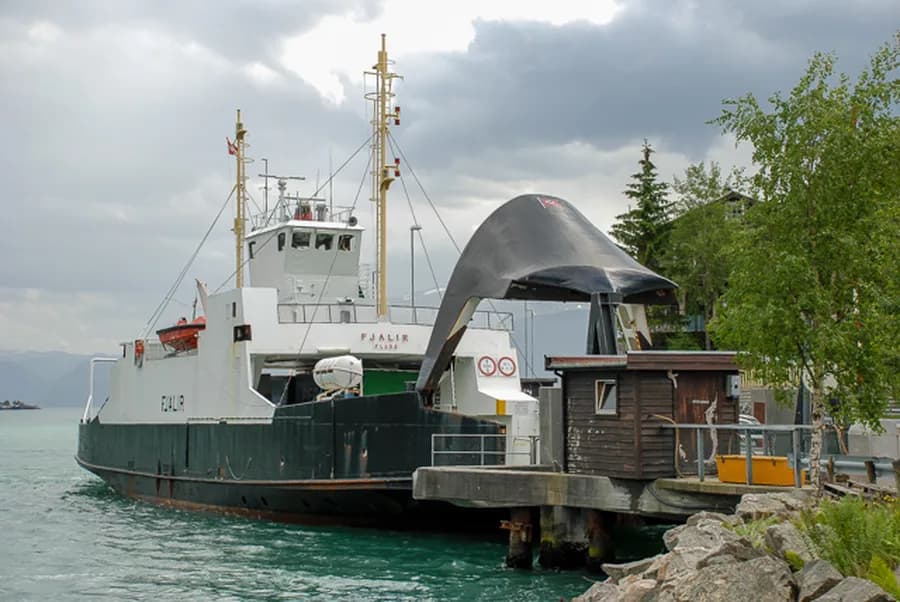
Visual Archive
Gallery
Explore More
Similar Vessels
Community
Vessel Comments